Hindi Typing Test: A Complete Guide From Basics to Mastery
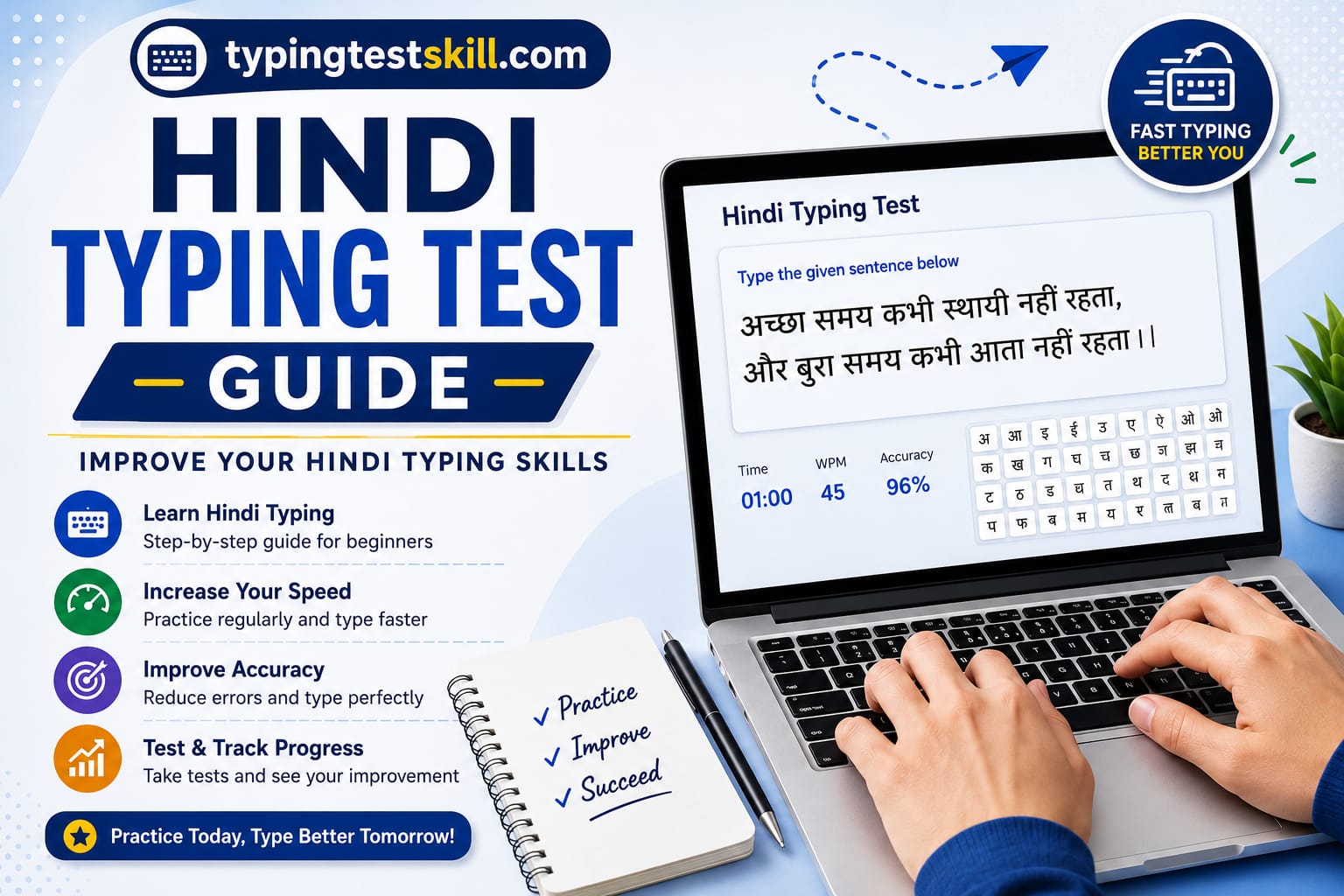
Hindi Typing Test: A Complete Guide From Basics to Mastery
Fast, accurate typing isn't just a nice to have anymore for a lot of people in India, it's the difference between getting a job and not. If you're eyeing a government post, working in data entry, or just tired of hunting for keys one at a time, Hindi typing is worth taking seriously. Here's what actually helps.
Why Hindi Typing Actually Matters Here
Walk into almost any recruitment process for courts, collectorates, banks, or government ministries, and you'll find a typing test somewhere in the pipeline. Clerk positions, data operator roles these almost always come with a Hindi typing requirement attached. That's not going away anytime soon, which is exactly why so many candidates spend months practicing before they even apply.
So How Does an Online Test Work, Exactly?
Most sites these days skip the software download entirely. You open a page in your browser, get handed a paragraph, and start typing against the clock. Once time's up, you get a breakdown your words per minute, your accuracy, sometimes even a list of exactly where you slipped up. It's simple enough that a college student and a fifty year old bank clerk can both use it without a manual.

Mangal Font: Why You Can't Ignore It
Here's something a lot of first-timers get wrong: they practice on a site using some random font, then show up to the actual exam and everything looks different. Government exams almost universally stick to Unicode's Mangal font. It renders Devanagari matras and conjunct letters correctly across basically every system, which is exactly why exam bodies trust it. Practice on anything else and you're setting yourself up for a rough surprise on test day.
What About CPCT?
If you're in Madhya Pradesh or applying for jobs that require it, you've probably run into CPCT the Computer Proficiency Certification Test. Hindi typing is a core chunk of it. You get a paragraph, a time limit, and your score depends on both how fast you went and how clean your typing was. Candidates who treat it casually tend to be the ones who fail it. Mock tests that mirror the real format aren't optional if you're serious about this.
Not All Practice Material Is Equal
Typing random sentences off the top of your head won't get you far. What actually helps is practicing on content that resembles what you'll face in the real exam a mix of everyday words alongside the trickier matras and conjuncts that trip people up. Start easy. Short lines, simple vocabulary. Then work your way up to longer, denser paragraphs once your fingers stop hesitating.
You Don't Need to Pay for This
Honestly, one of the better things about learning Hindi typing today is that it costs nothing. Plenty of solid platforms let you practice as many times as you want, free. No subscriptions, no catch. You can sit down after dinner, practice for twenty minutes, and repeat it the next day all from home. Do that consistently and your fingers start finding keys on their own, without you glancing down every few seconds. That's touch typing, and it's the real goal here.
Why Everyone Practices in 5 Minute Chunks
Five minutes is the standard test window across most government and private exams, so there's a good reason to train in exactly that format. It's long enough to test real stamina and concentration, short enough to stay intense. If your speed drops off in minute four, you'll find out in practice not during the exam, when it actually counts. Don't panic if you're slow at first. That changes fast with repetition.
Speed Without Accuracy Is Kind of Pointless
A mistake a lot of people make: chasing speed and brushing off errors as no big deal. In most scoring systems, accuracy carries just as much weight as speed, sometimes more. The smarter approach is to slow down first, nail the correct keystrokes, and only then push your pace up. Do it in that order and your speed climbs on its own without you sacrificing accuracy to get there.
A Few Things That Genuinely Help
Put in twenty to thirty minutes a day, minimum consistency beats marathon sessions. Sit properly, don't hunch over the keyboard, and resist the urge to look down at your fingers. Learn correct finger placement early; it saves you from bad habits later. And after each session, actually look at your results figure out which specific words or matras keep tripping you up, and target those instead of just typing more of the same.
Bottom Line
Nobody's born a fast Hindi typist. It's a skill built through repetition, patient correction, and showing up consistently even when progress feels slow. Whether you're chasing a government job or just want this on your resume, the path is the same: practice a little every day, pay attention to your mistakes, and let the speed come naturally. It will.