Why Is a Typing Test Important? 7 Key Benefits
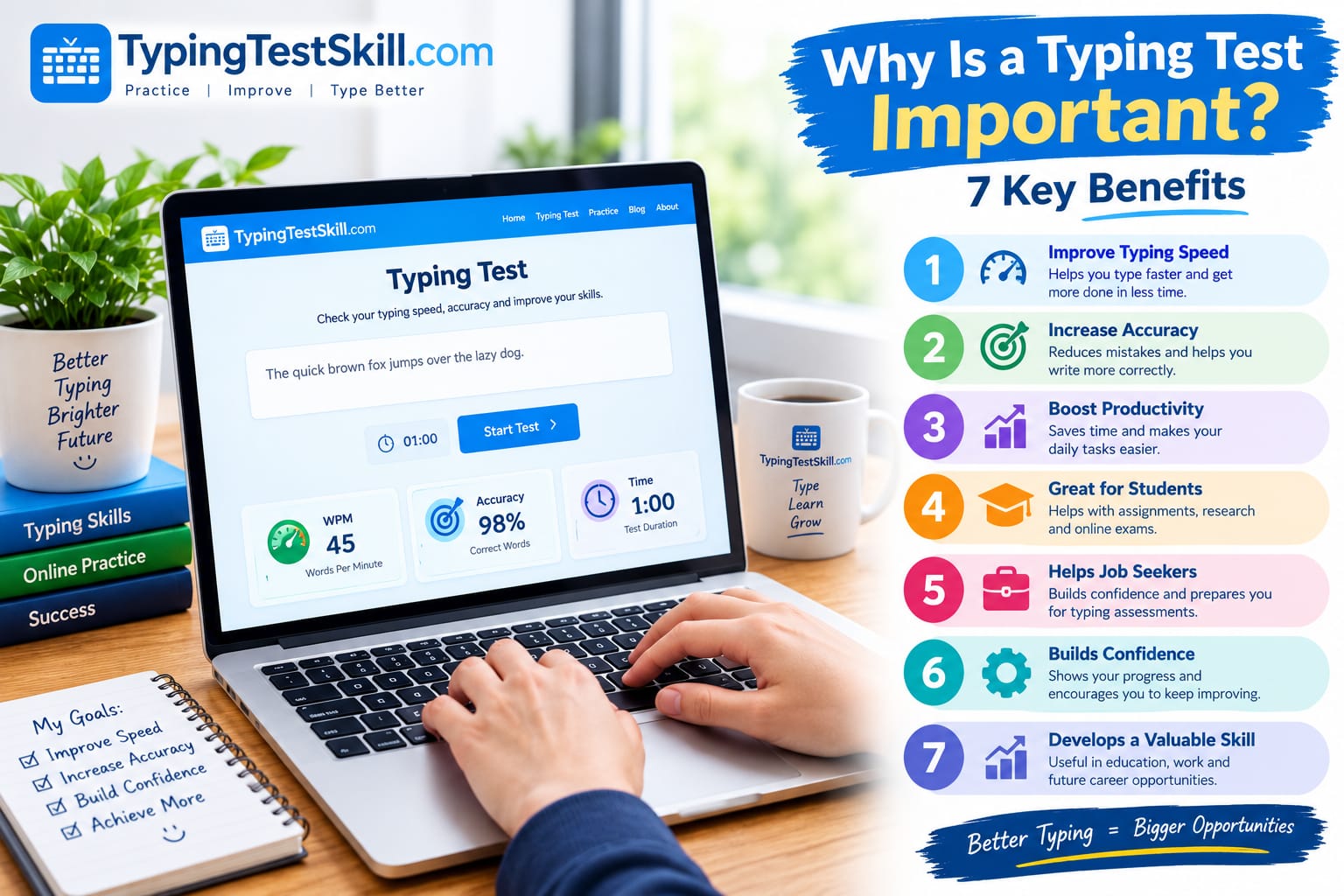
Why Is Typing Test Important and Why Do We Use It ?
Typing has become an essential skill in today's digital world. From students and teachers to office workers and freelancers, millions of people use keyboards every day. We type emails, prepare documents, complete assignments, communicate with clients, and perform many other tasks on computers. However, many people do not know how fast or accurately they can type. This is where a typing test becomes useful.
A typing test helps you measure your typing speed, check your accuracy, identify mistakes, and understand your current skill level. With regular practice, you can develop better typing habits and become more confident when using a keyboard. Platforms such as "TypingTestSkill.com" can help users explore typing tests and work toward improving their typing performance.
1. What Is a Typing Test?
A typing test is an online activity that measures how quickly and accurately a person can type words using a keyboard. During a test, you usually need to type a passage, sentence, or collection of words within a specific time limit.
After completing the test, you may receive results showing your typing speed in words per minute (WPM), accuracy percentage, and other performance measurements, depending on the test.
For example, if you type 40 words in one minute, your typing speed may be around 40 WPM, depending on the scoring method. Your accuracy score shows how correctly you entered the required text.
Typing tests are useful for beginners and experienced typists alike. Beginners can learn about their current abilities, while experienced users can challenge themselves to achieve better results. You can visit "TypingTestSkill.com to explore typing practice and make it part of your learning routine.
2. Why Is a Typing Test Important?
A typing test is important because it helps you understand your strengths and weaknesses. Without measuring your performance, you may find it difficult to determine whether your typing skills are improving.
For instance, you might feel that you type quickly, but a typing test can show your actual speed and accuracy. Once you know your results, you can set realistic goals and create a practice plan.
Typing tests also help you recognize common mistakes. You may discover that you frequently press the wrong keys, misspell words, or struggle to maintain a consistent speed. Identifying these problems is the first step toward correcting them.
Regular testing can also motivate you to continue practicing. When you notice improvements in your WPM or accuracy, you can see the results of your effort. Over time, this can help you build confidence and develop a more efficient typing routine.
3. How Typing Tests Improve Productivity
Typing speed and accuracy can make a significant difference in everyday computer work. When you type efficiently, you can complete many tasks in less time and spend more time focusing on the quality of your work.
Students can use better typing skills to prepare assignments, write reports, and complete computer-based activities. Office workers may find it easier to prepare emails, manage documents, and enter information into digital systems.
Freelancers, bloggers, content writers, and virtual assistants can also benefit from efficient typing. Many of their daily tasks involve writing messages, preparing content, and communicating with clients.
However, typing faster is not the only goal. Accuracy is equally important because frequent errors require additional time to correct. A good typing test helps you monitor both aspects of your performance.
By practicing regularly and reviewing your results, you can gradually develop a better balance between speed and accuracy. Visit "TypingTestSkill.com" to explore opportunities to practice and improve your typing skills.
4. Benefits of Typing Tests for Students and Job Seekers
Typing tests can be particularly helpful for students and people preparing for employment. In education, students frequently use computers to complete assignments, research topics, prepare presentations, and participate in online learning.
Improving typing skills can make these activities more comfortable and efficient. Students who practice regularly may become more confident when writing longer passages or completing timed computer-based tasks.
Typing ability can also be valuable in professional environments. Some administrative, customer support, transcription, and data-entry positions require employees to type accurately and efficiently. Certain employers may ask candidates to complete a typing assessment during the recruitment process.
Taking typing tests before applying for these jobs can help candidates understand their current abilities and identify areas for improvement.
Although every job does not require a typing test, developing this skill can strengthen your computer literacy and support your professional growth. Regular practice can help you prepare for opportunities where typing speed and accuracy matter.
5. How Typing Tests Measure Speed and Accuracy
Two of the most important measurements in typing tests are words per minute and typing accuracy.
Typing Speed (WPM): Words per minute measures how quickly you type. A higher WPM generally indicates faster typing, although the calculation method can vary between testing platforms.
Typing Accuracy: Accuracy measures how closely your typed text matches the original passage. A higher accuracy percentage generally means you have made fewer typing mistakes.
For example, imagine that two people take the same typing test. The first person types 45 WPM with 98% accuracy, while the second person types 55 WPM with 85% accuracy. The second person is faster, but the first person makes fewer errors.
This example shows why you should not focus on speed alone. Your goal should be to increase your typing speed while maintaining good accuracy.
Tracking these measurements over time can help you understand your progress and decide what to practice next. On "TypingTestSkill.com" (https://www.typingtestskill.com/), you can explore typing practice as part of your effort to develop stronger keyboard skills.
6. How to Improve Your Typing Skills Step by Step
Improving your typing skills requires patience, consistency, and the right approach. You do not need to practice for several hours every day. A short, focused routine can be a useful starting point.
Follow these simple steps:
1. Take your first typing test: Measure your current typing speed and accuracy so you have a starting point.
2. Practice every day: Spend around 10–15 minutes practicing consistently.
3. Focus on accuracy first: Try to reduce mistakes before pushing yourself to type faster.
4. Learn proper finger placement: Practice using the correct fingers for different keys.
5. Avoid looking at the keyboard: Gradually develop touch-typing skills by learning where the keys are located.
6. Repeat typing tests: Take tests regularly to check whether your performance is improving.
7. Set achievable goals: If your current speed is 25 WPM, work toward 30 WPM before setting a much higher target.
Remember that everyone learns at a different pace. Do not feel discouraged if your results improve slowly. Consistent practice and attention to mistakes can help you build better habits.
You can use "TypingTestSkill.com as a starting point for your typing practice routine.
7. Start Improving Your Typing Skills with TypingTestSkill.com
A typing test is more than a simple online activity. It is a practical way to understand your typing ability, identify mistakes, monitor progress, and develop an important digital skill.
Whether you are a student, job seeker, freelancer, office worker, or someone who regularly uses a computer, improving your typing can make everyday tasks easier. Better typing habits can help you work more efficiently, communicate comfortably, and approach computer-based activities with greater confidence.
The most effective approach is to practice consistently, focus on accuracy, and measure your progress over time. Avoid comparing yourself with others too much. Instead, concentrate on improving your own results and reaching realistic goals.
If you want to develop your typing skills, visit "TypingTestSkill.com and explore the available typing test and practice options.
Start by checking your current performance, identify the areas where you need improvement, and make regular practice part of your daily routine.
Final Thoughts: Typing tests help us understand how well we use a keyboard and what we can do to improve. By combining regular practice with attention to speed and accuracy, you can gradually become a more confident and efficient typist. Start today, keep practicing, and take one step at a time toward better typing skills.