Live Typing Test: Measure Your Typing Speed Online
Live Typing Test: Measure Your Typing Speed Online
Want to know how fast you can type? A live typing test lets you measure your typing speed, check your accuracy, and practise entering text under a time limit. Whether you are a student, office worker, freelancer, job applicant, or beginner, checking your typing performance can help you understand your current skills and identify areas for improvement.
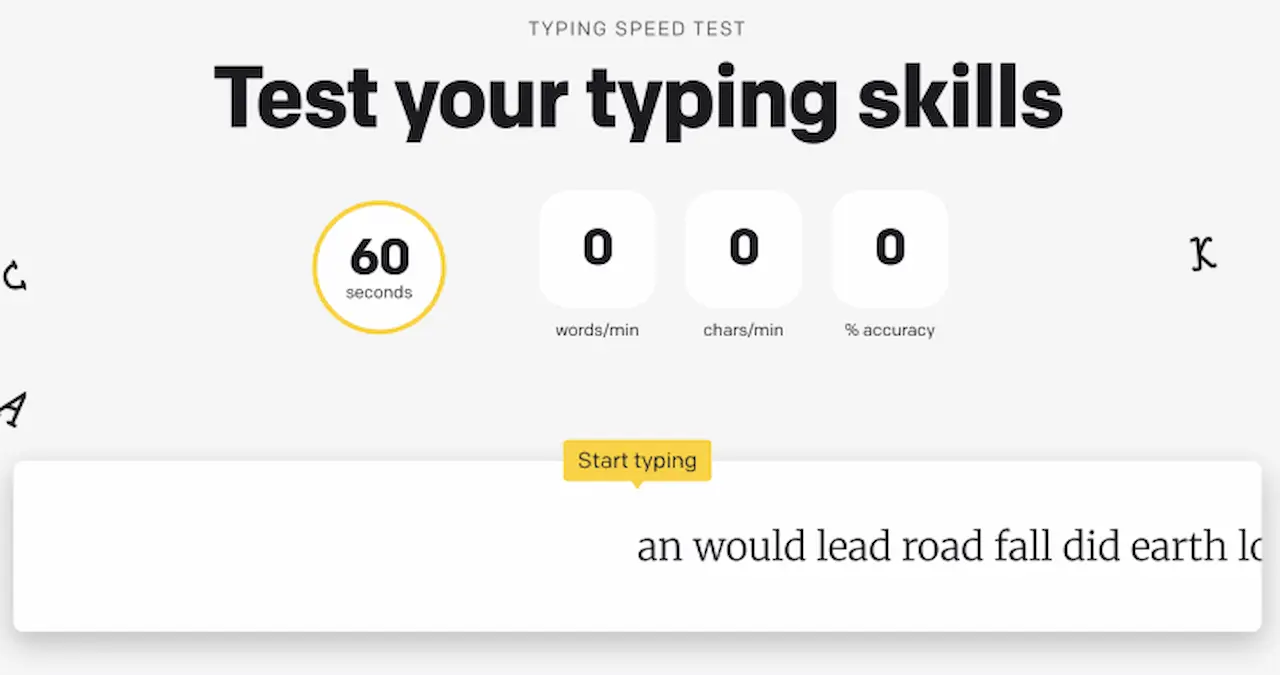
A live typing test typically displays text on your screen and measures your performance as you type. Depending on the tool, you may receive information about words per minute (WPM), accuracy, and typing errors.
With TypingTestSkill, you can practise using different test durations and work towards improving your speed and accuracy.
Ready to check your typing speed? Start a free online typing test on TypingTestSkill and use your result as a starting point for your practice routine.
What Is a Live Typing Test?
A live typing test is an online assessment that measures how quickly and accurately you can reproduce text using a keyboard. The test usually presents a passage that you must type within a specified period.
Unlike a simple typing lesson, a timed typing test helps you evaluate your performance under a time limit. Depending on the platform, the results may include:
- Words per minute (WPM): A measure of your typing speed.
- Accuracy: An indication of how much of your typed text is correct.
- Errors: Mistyped or missing characters, words, or other mistakes identified by the test.
- Time: The duration of your typing attempt.
- Progress information: Results that you can compare across multiple practice sessions.
The scoring method varies between tools, so it is useful to understand how your chosen test calculates speed and accuracy.
Why Should You Take a Live Typing Test?
A live typing test is useful for more than checking a number on the screen. It can help you establish a baseline, practise under timed conditions, and recognise the habits that affect your performance.
1. Measure Your Current Typing Speed
Your first test gives you an initial measurement of your typing ability. Instead of guessing how fast you type, you can use your WPM result to set a realistic practice goal.
Start with the TypingTestSkill online typing test, complete a passage, and record your result.
2. Check Your Typing Accuracy
Typing quickly is not enough if you frequently enter the wrong characters. Accuracy-focused practice can help you reduce errors and spend less time correcting text.
Review your mistakes after each session and pay attention to recurring problems, such as missed letters, incorrect punctuation, or difficult key combinations.
3. Track Your Progress Over Time
Taking tests under similar conditions allows you to compare your results across different sessions. You can see whether your speed is increasing, your accuracy is improving, or a particular weakness needs more attention.
Keep a simple record of your date, test duration, WPM, and accuracy where available.
4. Prepare for Typing Assessments
Some office, clerical, administrative, and data-entry jobs include a typing assessment. Practising with a timer can help you become more comfortable entering text under time pressure.
If you are preparing for a specific recruitment test, check the official instructions for the required speed, language, duration, and accuracy criteria. Online practice does not replace an official assessment.
5. Improve Everyday Productivity
Typing is part of many everyday tasks, including writing emails, preparing documents, entering information, and completing assignments. Improving your technique may help you complete keyboard-based tasks more efficiently.
How Does a Live Typing Test Work?
Most online typing tests follow a straightforward process.
Step 1: Choose a Test Duration
Select a duration that matches your current ability and goal. A short test is useful for a quick check, while a longer test lets you practise maintaining a steady pace.
Step 2: Read the Text on the Screen
The test displays words, sentences, or a passage for you to reproduce. Read the text carefully and position your hands comfortably on the keyboard.
Step 3: Start Typing
Enter the displayed text as accurately as possible. Depending on the tool, the timer may start automatically when you begin typing or after you press a start button.
Step 4: Monitor Your Performance
Some tests highlight mistakes as you type, while others provide the main results at the end. Follow the instructions shown by the particular test you are using.
Step 5: Review Your Results
Check your WPM, accuracy, and any error information available. Use those results to decide what you should practise next.
To begin, open the free TypingTestSkill typing test.
Choose the Right Live Typing Test Duration
Different test durations can help you practise different aspects of typing. Start with a short session if you are new to typing, then increase the duration as you become more comfortable.
1-Minute Live Typing Test
The 1-minute typing test is a quick way to check your current speed. It is suitable for a short practice session or a fast performance check.
Because the test is brief, results may vary between attempts. Repeat the test before deciding whether your typing speed has improved.
3-Minute Live Typing Test
Try the 3-minute typing test to practise for longer while keeping the session manageable.
Focus on maintaining a consistent rhythm and avoiding unnecessary pauses.
5-Minute Live Typing Test
The 5-minute typing test is a practical option for regular practice. It gives you more time to settle into a rhythm and concentrate on accurate typing.
10-Minute Live Typing Test
Use the 10-minute typing test to practise maintaining your technique over a longer period.
Pay attention to whether your accuracy changes when you become tired or try to type too quickly.
15-Minute Live Typing Test
The 15-minute typing test is useful for longer practice sessions. It can help you work on concentration and consistency when typing for an extended period.
30-Minute Live Typing Test
The 30-minute typing test provides an extended session for users who want to practise sustained typing.
If you are a beginner, build up gradually instead of starting with a long session immediately.
Understanding WPM and Typing Accuracy
What Does WPM Mean?
WPM stands for words per minute. It is a common way of measuring typing speed.
Many typing tests calculate gross WPM using a standardised word length of five characters, including spaces.
For example, if you type 1,000 characters in five minutes:
1,000 ÷ 5 ÷ 5 = 40 gross WPM.
Some tests calculate net WPM by accounting for mistakes. The precise calculation depends on the platform, so check the scoring method if you want to compare results from different tools.
What Is Typing Accuracy?
Typing accuracy indicates how much of the text you enter correctly. Different tools may calculate it using characters, words, or another scoring method.
Improving accuracy helps you develop better typing habits and can reduce the need for corrections.
To practise more accurately:
- Use the correct fingers for different keys.
- Keep your eyes on the text instead of looking down repeatedly.
- Slow down when you notice recurring errors.
- Pay attention to punctuation and spaces.
- Review your results after every test.
What Is a Good Typing Speed?
A good typing speed depends on your experience and what you need to accomplish. The following figures are general practice benchmarks, not official pass marks for every job.
Typing speedGeneral guidanceBelow 20 WPMFocus on basic keyboard familiarity20–30 WPMDevelop consistent finger placement30–40 WPMBuild a foundation for everyday typing40–50 WPMPractise efficient general typing50–60 WPMWork on maintaining speed and accuracyAbove 60 WPMFocus on consistency and reducing errors
For a recruitment test, always follow the speed and accuracy requirements stated in the official notice.
How to Improve Your Results in a Live Typing Test
Taking tests regularly is useful, but the way you practise matters. Follow these techniques to develop a more consistent typing style.
1. Focus on Accuracy Before Speed
Do not try to reach your highest possible WPM in every session. Start at a pace you can control and gradually increase it as your accuracy improves.
2. Learn Correct Finger Placement
On a standard QWERTY keyboard, the left-hand fingers rest on A, S, D, and F, while the right-hand fingers rest on J, K, L, and the semicolon key.
Practise using the appropriate fingers for other keys rather than relying on only two or three fingers.
3. Practise Regularly
Choose a realistic practice routine, such as 10–15 minutes on days when your schedule allows. Short, focused sessions are often easier to maintain than occasional lengthy sessions.
4. Identify Your Weak Keys
Notice which letters, words, or punctuation marks cause repeated errors. Practise those combinations separately before returning to full passages.
5. Maintain a Comfortable Posture
Sit with your back supported and your shoulders relaxed. Keep your wrists in a comfortable, neutral position and avoid striking the keys with unnecessary force.
6. Use Different Test Durations
Short tests are useful for quick checks, while longer tests can help you practise concentration and consistency. Alternate between durations according to your goals.
7. Review Your Results
Record your WPM and accuracy after each session. Compare results across several attempts and choose one specific weakness to work on next.
Common Mistakes to Avoid During a Live Typing Test
Certain habits can make it harder to achieve consistent results.
- Looking at the keyboard constantly: Practise learning key positions while keeping your eyes on the screen.
- Rushing through the passage: Prioritise correct typing before increasing your pace.
- Using incorrect finger placement: Learn consistent movements to reduce unnecessary hand travel.
- Ignoring repeated errors: Review your mistakes and practise difficult letter combinations.
- Using only short tests: Include longer sessions if you need to practise sustained typing.
- Comparing unrelated results: Use similar durations and test conditions when tracking your progress.
- Practising without a goal: Decide whether each session is intended to improve accuracy, rhythm, or speed.
Correcting these habits can make your practice more focused and help you understand why your results change.
How to Choose an Online Live Typing Test
Not every typing tool provides the same features. When choosing a platform, consider the following points.
Clear Results
Look for a test that explains your typing speed and accuracy. Understanding the scoring method makes it easier to track improvement.
Suitable Test Durations
Different time limits allow you to practise according to your experience. Short and long tests can serve different purposes.
Easy-to-Use Interface
A clear layout helps you focus on the passage instead of unnecessary distractions.
Useful Practice Options
A combination of timed tests, lessons, and accuracy exercises can help you practise different skills.
Appropriate Progress Features
If you want to track improvement, look for features that allow you to review or record results across sessions.
TypingTestSkill offers online typing test options with different durations so you can practise according to your goals.
Frequently Asked Questions
What is a live typing test?
A live typing test is an online tool that measures your typing performance while you enter displayed text. Depending on the platform, it may report WPM, accuracy, errors, and the time taken.
How can I check my typing speed online?
Open an online typing test, choose a duration, type the displayed passage, and review your results. You can begin with the TypingTestSkill online typing test.
Is a live typing test free?
Some online typing tests are free, while others may offer paid features. Visit the platform and check the available options. You can start by exploring TypingTestSkill's online typing test.
Is a one-minute typing test accurate?
A one-minute test can provide a useful quick estimate, but results may fluctuate because the session is short. Repeat the test or use a longer duration for additional comparison.
What is a good WPM score?
It depends on your experience and purpose. A speed that is suitable for everyday typing may not meet a particular employer's requirement. Check official criteria if you are preparing for a job assessment.
Should I focus on speed or accuracy first?
Focus on accuracy and consistent technique before increasing speed. Typing quickly with frequent errors can create extra work and make your results less consistent.
Can a live typing test help me prepare for a job?
It can help you practise under timed conditions and track your typing performance. However, it does not guarantee that you will meet an employer's requirements or pass an official assessment.
How often should I take a live typing test?
Choose a regular schedule that fits your practice routine. Review your results and use the information to guide your next session rather than taking tests repeatedly without a specific goal.
Start Your Live Typing Test Today
A live typing test is a practical way to measure your current speed, review your accuracy, and identify the areas that need more practice. With a consistent routine and the right technique, you can gradually develop more efficient typing habits.
Whether you are a beginner, student, professional, or job applicant, begin with a test that matches your current ability. Record your results, practise your weak areas, and increase the duration as you become more comfortable.
Take your first test now: Visit the free online typing test on TypingTestSkill and start working towards your typing goals.